

Choosing the right Frequency Vfd can influence motor life, energy costs, production stability, and maintenance planning. Global buyers often compare price first, yet field performance depends on voltage, load profile, enclosure design, and local support. A drive running smoothly in a 400V, 50Hz factory may need different settings in a 480V, 60Hz facility.
This guide reviews ten leading Frequency Vfd options for industrial and commercial applications. The comparison considers power range, overload capacity, speed control, harmonic performance, communication protocols, safety functions, and commissioning tools. It also examines practical details, such as keypad visibility, terminal access, cooling requirements, and support for pumps, conveyors, fans, compressors, and machine tools. These details matter during installation.
Not every highly rated model suits every project. That is the uncomfortable truth. A compact drive may fit a cabinet but struggle in a dusty workshop. Another may offer advanced control but require costly technical training. Regional certifications, spare-part availability, warranty terms, and installer experience also affect the final decision. Buyers should verify specifications with manufacturers before ordering, especially for braking resistors, motor compatibility, and environmental ratings. This overview aims to provide a balanced, evidence-informed starting point rather than an absolute ranking. Real installations can expose weaknesses that brochures rarely mention. Reliable selection requires careful comparison, documented testing, and honest attention to operating conditions.
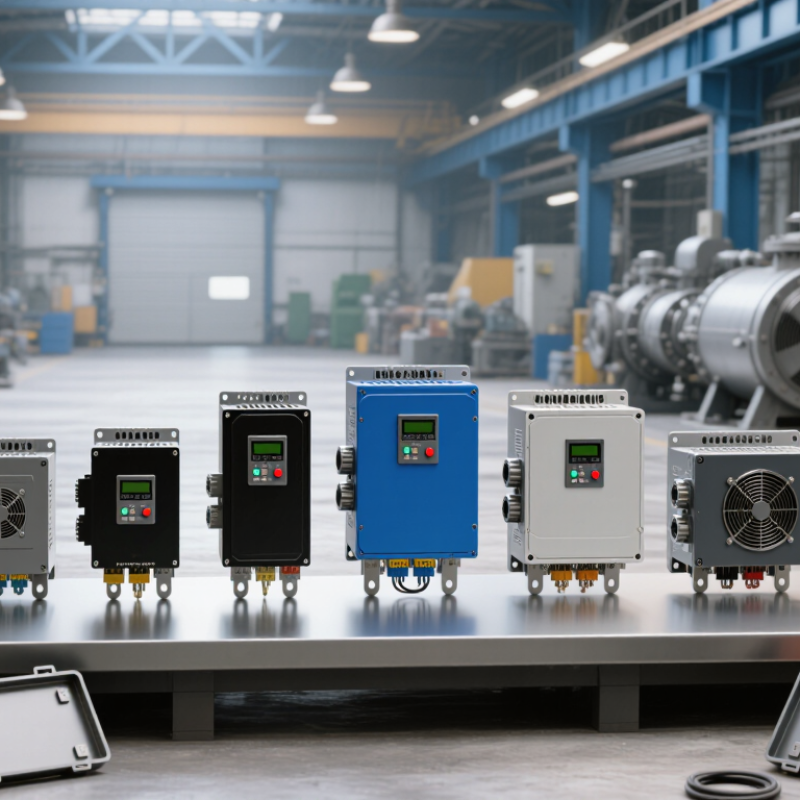
For global buyers, a frequency VFD is more than a speed controller. It converts fixed-frequency AC into adjustable voltage and frequency for motor control. IEC 61800-2 provides useful technical language for comparing these drives. Its ratings cover voltage, current, frequency, overload capability, duty, and operating conditions. Read the nameplate carefully. A drive rated for normal duty may not survive repeated heavy starts. Pumps, fans, conveyors, hoists, and compressors require different sizing assumptions. I have seen installations fail because temperature and cable length seemed like minor details.
Most compact units use a two-level voltage-source inverter with rectification, a DC link, and switching transistors. This design is economical for many pumps and fans. Three-level topologies reduce voltage stress and output distortion, but add components and control complexity. Regenerative or matrix arrangements can suit specialized machinery, yet their cost deserves scrutiny. Motor insulation, bearing currents, electromagnetic compatibility, and harmonic distortion also matter. A technically impressive topology can still be a poor choice.
In practice, selection begins with the motor’s rated current, not only its kilowatt value. Check supply voltage, input frequency, enclosure rating, cooling, altitude, and short-circuit conditions. For long motor cables, output filters may reduce reflected-wave stress. Lifting equipment needs verified braking hardware and controlled stopping. Global buyers should request test records, clear manuals, declared IEC ratings, and accessible technical support. Standards improve comparison, but documentation can remain incomplete. I would leave margin for heat, dust, and uncertain maintenance habits.
Comparing ten leading frequency VFDs requires more than reading their power ratings. A 0.75 kW pump needs stable low-speed control and simple commissioning. Small, but demanding. A 5.5 kW conveyor may need braking control, accurate torque, and frequent starts. For these motors, sensorless vector control can improve response without adding an encoder.
From 11 to 110 kW, thermal design becomes more important. Engineers should check continuous output current, overload duration, cabinet airflow, and ambient temperature limits. A drive rated at 55 kW may not suit a heavily loaded motor at 50°C. Derating is often overlooked. Built-in protection against overcurrent, ground faults, and motor overheating also supports safer operation.
At 132 to 1,000 kW, installation quality strongly affects reliability. Large systems may require input reactors, harmonic reduction, bypass arrangements, and external cooling. Medium-voltage applications need different insulation, switching, and maintenance practices. Buyers should compare control modes, fieldbus options, braking performance, enclosure ratings, and service access. Global projects also require documentation that matches local electrical standards. In practice, the “best” VFD depends on the motor, load profile, grid quality, and technician experience. I would not select a unit from a table alone. Real-site testing can expose vibration, heat, or tuning issues that specifications miss.
For global buyers, voltage and frequency determine whether a VFD fits the installation. A 400 V/50 Hz system is common across many regions. A 480 V/60 Hz system is widely used in North American industrial facilities. These values are not interchangeable.
Check the motor nameplate before comparing VFD models. Confirm rated voltage, current, phase, frequency, and overload duty. A drive designed for 400 V input may fail on a 480 V supply. Some units accept both ranges, but the manual must confirm this. Small detail. It matters.
Frequency controls motor speed, while voltage supports magnetic performance. A motor rated 400 V at 50 Hz may require different settings from a motor rated 480 V at 60 Hz. Entering the wrong base frequency can cause heating, weak torque, or unstable operation. A 50 Hz motor running at 60 Hz may exceed its mechanical limits.
Commissioning exposes assumptions. Test acceleration, braking, running current, and motor temperature under real load. Keep cable length, grounding, EMC requirements, enclosure rating, and local electrical rules in view. Derating may be necessary in hot panels or high-altitude sites. I have seen selection tables look correct until the panel temperature changed. That is an uncomfortable but useful reminder: regional voltage matching is only the starting point.
When comparing the 10 best frequency VFDs for global buyers, energy testing deserves more attention than feature lists. A VFD controls motor speed, but IE2–IE5 classes describe motor efficiency, not the drive itself. This distinction prevents misleading comparisons.
Test the complete drive, motor, and fan package under real operating points. Record input power, output speed, airflow, pressure, and motor temperature. A laboratory nameplate result may not match a dusty rooftop unit or a partially loaded factory fan. Small wiring losses also matter.
Fan systems follow the cube power law. Reducing speed to 80% can reduce theoretical power demand to about 51%. The result is impressive.
However, the law assumes similar system resistance and stable control conditions. Filters clog, dampers move, and sensors drift. I have seen calculated savings exceed field measurements because commissioning was rushed. That weakness deserves honest reporting.
For buyers, compare motor efficiency from IE2 through IE5, drive losses at partial load, standby consumption, harmonic performance, and cooling requirements. Request test methods, uncertainty ranges, and operating profiles rather than one headline percentage. An IE5 motor may cost more, yet frequent low-speed operation can improve its payback. In other installations, a well-tuned IE3 motor and properly sized VFD may perform better financially. Measure before deciding.
10 Best Frequency VFDs for Global Buyers?
Choosing a frequency VFD requires more than comparing output power and price. Harmonic performance can affect transformers, capacitors, and sensitive control equipment. IEEE 519 evaluates distortion at the point of common coupling, not only inside the drive. A six-pulse input may need a line reactor, passive filter, or active front end. Real project results depend on cable length, load variation, and the complete electrical system. A perfect drive does not exist.
Safety must match the installation environment. Check protective functions such as safe torque off against IEC 61800-5-2 requirements. Confirm that the complete machine follows applicable IEC 60204-1 practices. Enclosure selection also matters. IP ratings under IEC 60529 help protect against dust and water, but an IP rating does not replace correct cooling. Outdoor cabinets may need sun shielding, drainage, and corrosion control. Small oversights become expensive.
Tips: Request harmonic data at your expected load range. Review EMC limits under IEC 61800-3, including installation category and cable arrangement. Verify IP ratings from test documentation, not marketing labels. Measure the power system when possible. Simulations are useful, but field conditions can disagree. That difference deserves honest review.
