

Scroll Top
4801 Bennett Rd. Toledo, Ohio 43612

What Are the China Top 10 Embedded Computer Manufacturers?

China has become a major source of industrial computing solutions, from compact fanless boxes to rugged systems for factories, transport, energy, and smart retail. This guide examines the China Top 10 Embedded Computer Manufacturers through practical, buyer-focused criteria rather than brand visibility alone. The goal is to identify companies with proven engineering ability, stable production, and dependable after-sales support.

Each manufacturer should be assessed through product quality, processor options, enclosure design, operating temperature, connectivity, and customization capacity. A reliable Embedded Computer supplier should provide clear specifications, test documentation, lifecycle information, and responsive technical assistance. Details matter. A dusty workshop, a vibrating vehicle, or a control cabinet with limited space can expose weaknesses that product photos hide.

The comparison also considers certifications, manufacturing experience, delivery performance, and application expertise. These factors help distinguish a genuine industrial partner from a trading company with limited technical control. However, no ranking remains perfect for every project. Some manufacturers excel at small-batch customization, while others offer stronger volume production or global support. This guide may therefore require careful verification against your own operating environment, budget, and compliance requirements.

Readers should request samples, inspect interfaces, confirm software compatibility, and discuss warranty terms before placing large orders. A short factory audit can reveal more than polished marketing language. The companies presented here represent important options in China’s embedded computing market, but the final choice should depend on evidence, communication, and real project performance.
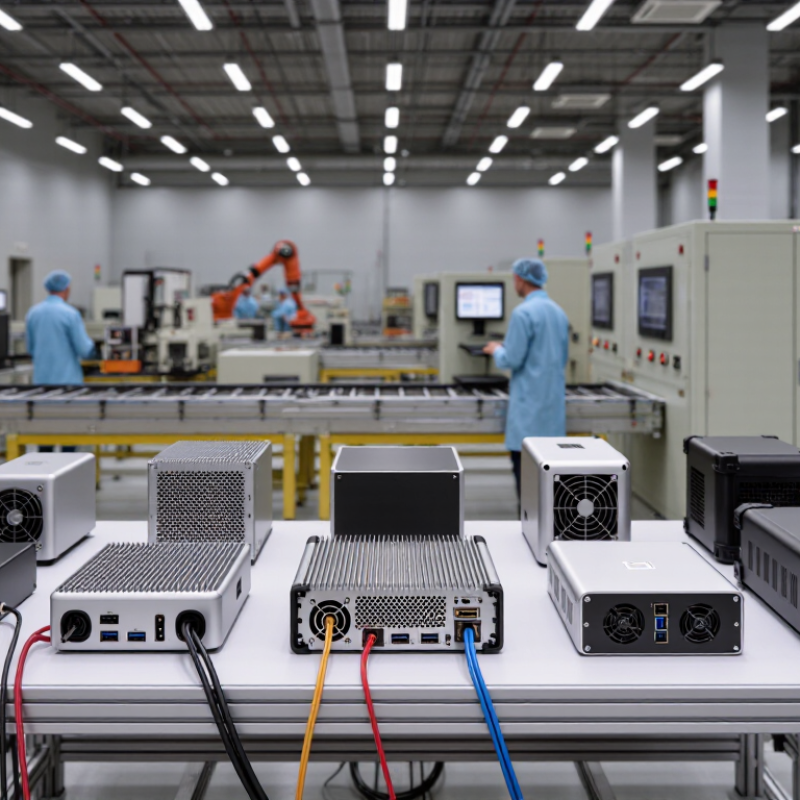
What Are the China Top 10 Embedded Computer Manufacturers?

What Is an Embedded Computer and Why Does China Matter?

An embedded computer is a compact computing system built into a larger product or machine. It combines a processor, memory, storage, interfaces, and software for a specific task. Unlike office computers, it may operate for years inside a vehicle, factory controller, medical instrument, or outdoor cabinet.

MarketsandMarkets estimates that the global embedded computing market could grow from about USD 116 billion in 2023 to USD 158 billion by 2028. The report identifies industrial automation, transportation, and healthcare as important demand areas.

China matters because it connects component supply, board production, enclosure manufacturing, and system integration within one broad industrial network. UNIDO reported that China contributed about 31% of global manufacturing value added in 2022. That scale can shorten development cycles and support flexible production.

A meaningful China top-ten list should examine more than sales claims. It should compare processor support, operating temperature, lifecycle planning, cybersecurity practices, certification experience, and after-sales engineering. Field experience also matters. A computer that survives vibration, dust, and unstable power is often more valuable than a faster laboratory unit.

The picture is not perfectly clean. Public rankings rarely disclose return rates or long-term failure data, so any list needs careful verification. I would also question rankings based only on export volume. Technical documentation, repair response, and software maintenance can decide whether an embedded system remains useful five years later.

How to Evaluate China’s Embedded Computer Manufacturers

How to Evaluate China’s Embedded Computer Manufacturers

Evaluating China’s embedded computer manufacturers requires more than comparing online prices. Start with the factory’s engineering depth, production controls, and experience with your industry. Ask for processor roadmaps, thermal test reports, and sample units from current production lines. A polished website proves very little.

Request evidence of quality systems and product traceability. Check whether each board has a clear revision history, serialized records, and documented component sources. Review compliance documents for your target markets, including safety, electromagnetic compatibility, and environmental requirements. Certifications should be verifiable, current, and linked to the exact model. Small details matter.

Test the computer under realistic conditions. Run continuous workloads in a warm enclosure, connect the intended displays, and measure startup behavior after repeated power cycles. Review BIOS controls, driver support, remote management, and repair procedures. Ask how long spare parts and firmware updates remain available. The cheapest quotation can become expensive after integration delays.

Communication also deserves a practical test. Send technical questions and measure response accuracy, not just speed. A reliable manufacturer should explain limitations clearly and record design changes formally. Visit the facility when possible, or arrange a live video audit. No scorecard is perfect. An attractive sample may hide weak production consistency, while a smaller supplier may provide stronger engineering support. Recheck every important claim before signing.

What Are the China Top 10 Embedded Computer Manufacturers? - How to Evaluate China’s Embedded Computer Manufacturers

Rank Anonymized Manufacturer Profile Primary Product Focus Processor Architecture Coverage Typical Operating Temperature Typical DC Input Range Industrial Certifications Commonly Offered Product Life-Cycle Support Customization Capability Typical Sample Lead Time Warranty Benchmark Evaluation Score
1 Manufacturer Profile 01
Established industrial-computing supplier
Fanless box PCs, panel PCs, DIN-rail computers, vehicle computers x86-64 and ARM64 platforms; multi-core processors; optional accelerator support -20°C to 60°C standard; wider ranges available for selected models 9–36 VDC or 12–24 VDC, depending on platform CE, FCC, RoHS; model-specific testing required 5–7 years commonly targeted for industrial models BIOS, I/O, enclosure, memory, storage, operating-system image 3–6 weeks 12–36 months ★★★★☆ 9.2/10
2 Manufacturer Profile 02
Large-volume embedded-system producer
Industrial motherboards, embedded boards, rack systems, edge servers x86-64 platforms with broad CPU and chipset availability 0°C to 60°C standard; extended-temperature options on request 12–24 VDC, 19–36 VDC, and standard ATX input options CE, FCC, RoHS, REACH; documentation varies by model 3–5 years for mainstream products; longer by project agreement High; board layout, connectors, firmware, chassis, and carrier-board design 4–8 weeks 12–24 months ★★★★☆ 9.0/10
3 Manufacturer Profile 03
Automation and transportation specialist
Railway computers, vehicle PCs, automation controllers, rugged box PCs x86-64 and ARM64; real-time and low-power configurations available -25°C to 70°C on selected rugged models 9–36 VDC, 18–36 VDC, and protected vehicle-power inputs CE, FCC, RoHS; transportation compliance is model-specific 5–10 years for transportation and infrastructure projects Medium to high; mechanical, power, I/O, and firmware modifications 6–10 weeks 24–36 months ★★★★☆ 8.9/10
4 Manufacturer Profile 04
Compact edge-computing supplier
Mini PCs, embedded boards, gateway computers, IoT edge devices ARM64 and low-power x86-64 platforms 0°C to 50°C standard; -20°C to 60°C on industrial configurations 5–24 VDC, depending on board and enclosure design CE, FCC, RoHS, UKCA on selected products 3–5 years, subject to processor availability Medium; enclosure, storage, memory, software image, and I/O options 3–5 weeks 12–24 months ★★★★☆ 8.7/10
5 Manufacturer Profile 05
Display and human-machine-interface specialist
Panel PCs, touch computers, medical-display terminals, operator stations x86-64 and ARM64; integrated graphics configurations 0°C to 50°C standard; selected systems rated to 60°C 12–24 VDC, with surge-protected options CE, FCC, RoHS; medical or maritime approvals require project review 3–5 years for standard products High for display size, touch technology, bezel, mounting, and I/O 4–8 weeks 12–24 months ★★★★☆ 8.6/10
6 Manufacturer Profile 06
Rugged computing and field-deployment supplier
Rugged computers, mobile workstations, outdoor gateways, sealed systems x86-64 platforms; selected ARM64 edge configurations -30°C to 70°C on selected products 9–36 VDC or 18–36 VDC with ignition-control options CE, FCC, RoHS; IP and shock ratings are model-specific 5–7 years for rugged project platforms Medium; thermal design, enclosure sealing, power filtering, and connectors 6–12 weeks 24–36 months ★★★★☆ 8.5/10
7 Manufacturer Profile 07
Industrial networking and gateway provider
Edge gateways, communication computers, protocol converters, network appliances ARM64 and x86-64; hardware acceleration on selected models -20°C to 60°C standard; extended ratings available 9–36 VDC and 12–24 VDC CE, FCC, RoHS; cybersecurity documentation varies by product 3–7 years, depending on communication modules High for network interfaces, protocols, storage, firmware, and enclosure 4–7 weeks 12–24 months ★★★★☆ 8.4/10
8 Manufacturer Profile 08
Embedded board and ODM engineering house
COM modules, carrier boards, custom SBCs, reference platforms x86-64, ARM64, and project-specific system-on-module solutions 0°C to 60°C standard; industrial temperature available by design 5–24 VDC at board level; custom power designs supported CE, FCC, RoHS based on final system configuration 5–10 years for custom programs with volume commitment Very high; schematic, PCB, firmware, carrier board, and mechanical design 8–16 weeks for engineering samples 12–24 months ★★★★☆ 8.3/10
9 Manufacturer Profile 09
Cost-focused industrial PC manufacturer
Entry-level box PCs, embedded motherboards, digital signage computers Low-power x86-64 and ARM64 platforms 0°C to 50°C standard; -20°C to 60°C on selected models 12–24 VDC, with optional wider-input designs CE, FCC, RoHS; verify the exact finished configuration 2–5 years, depending on component availability Medium; memory, storage, I/O, enclosure, and software customization 2–5 weeks 12 months ★★★★☆ 8.1/10
10 Manufacturer Profile 10
Small-batch and application-specific supplier
Custom embedded computers, AI edge systems, laboratory and research platforms x86-64 and ARM64; accelerator-equipped systems available by project -10°C to 60°C standard; wider ranges subject to thermal validation 12–24 VDC or 19–36 VDC, depending on system design CE, FCC, RoHS after final product validation 3–5 years, normally defined in the project specification Very high; hardware, firmware, enclosure, thermal design, and software integration 8–14 weeks 12–24 months ★★★★☆ 8.0/10

Evaluation criteria include product reliability, industrial temperature capability, power-input flexibility, certification readiness, life-cycle support, engineering customization, lead time, warranty coverage, and after-sales responsiveness. Specifications are representative model-level benchmarks; buyers should verify the exact datasheet, test report, certification scope, component availability, and warranty terms before placing an order.

Who Are the Top 10 Embedded Computer Manufacturers in China?

China’s top 10 embedded computer manufacturers should be judged by engineering depth, not factory size alone. The strongest suppliers usually provide fanless computers, industrial motherboards, rugged edge gateways, and long-term product support. MarketsandMarkets reported that the global industrial PC market could grow from about US$5.4 billion in 2023 to US$7.8 billion by 2028. This growth reflects demand from automation, transport, energy, and smart manufacturing.

A reliable top-ten shortlist should examine processor options, operating-temperature ratings, shock resistance, lifecycle support, and certification records. IDC’s 2024 Worldwide Edge Spending Guide projected global edge-computing spending at roughly US$232 billion in 2024. That figure explains why Chinese manufacturers are expanding beyond basic hardware assembly. Leading companies now develop systems for machine vision, factory control, vehicle monitoring, and remote equipment management. However, rankings remain imperfect. Public revenue data often combines embedded computers with wider electronics businesses. Buyers should verify production capacity, firmware support, and failure rates directly.

Tips: Request a sample unit before placing a large order. Test it in real temperatures, vibration, and network conditions. Check whether spare parts remain available for five years. A low purchase price can become expensive when software updates stop. Also review ISO 9001 procedures, EMC testing, warranty terms, and response times. These practical details often separate dependable manufacturers from attractive but unproven suppliers.

How Do These Manufacturers Compare in Products and Industries?

China’s top embedded computer manufacturers differ more in engineering focus than in basic specifications. Some build compact fanless computers for factory control, while others emphasize rugged systems for vehicles and outdoor cabinets. Typical products include box PCs, panel PCs, industrial motherboards, edge gateways, and rack-mounted controllers. Processor choices range from low-power mobile chips to high-performance x86 platforms. Buyers should compare thermal design, expansion slots, operating temperature, and long-term supply stability.

In manufacturing plants, fanless box computers often manage machine vision, PLC communication, and production dashboards. These systems need stable performance beside motors, dust, and changing temperatures. Transportation projects usually require wider voltage input, vibration resistance, and multiple serial or Ethernet ports.

Medical equipment demands cleaner design, controlled component selection, and dependable lifecycle support. Retail and smart-building applications may favor smaller gateways with wireless connectivity and remote management. The best manufacturer depends on the working environment, not only benchmark scores.

A practical evaluation should include a sample unit, stress testing, and a review of technical documents. Ask for BIOS control, driver support, repair procedures, and product lifecycle commitments. Support quality can vary between regions and projects. This is easy to underestimate. Certifications may also cover only a specific model or configuration. No comparison is flawless, because published specifications rarely show field performance after years of dust, heat, and software updates. A careful buyer should record power consumption, boot time, port behavior, and enclosure temperature during realistic trials.

How to Choose the Right Chinese Embedded Computer Manufacturer

Choosing among China’s top embedded computer manufacturers requires more than comparing prices or polished websites. Start with your application: operating temperature, processor load, memory limits, storage type, enclosure size, and required ports. Request a written specification sheet, not a sales summary. Check whether the supplier has delivered similar systems for industrial, transportation, medical, or retail environments.

Ask for evidence of quality control. Useful documents include test reports, material declarations, factory audit records, and certificates relevant to your destination market. Confirm how boards are tested before shipment. A serious manufacturer should explain burn-in testing, vibration checks, thermal cycling, and firmware control. Ask for a sample unit and inspect its connectors, fan noise, cable routing, and BIOS settings. Small details often reveal production discipline.

Supply continuity matters too. Discuss component substitutions, minimum order quantities, repair procedures, and expected product lifetime. Get the warranty terms in writing, including response times and replacement responsibilities. A low quotation may exclude tooling, custom software, or repeated sample revisions. That can become expensive.

Do not trust every impressive presentation. A factory may pass an audit yet struggle with engineering changes. I would test communication with one clear technical question and one difficult question. Delayed or vague replies are warning signs. My own preference would be a supplier that admits limitations, documents risks, and proposes a practical correction. Perfect claims deserve scrutiny. Reliability is demonstrated over time.

How to Choose the Right Chinese Embedded Computer Manufacturer

Recommended procurement weighting for comparing embedded computer manufacturers. Certifications, product lifecycle planning, environmental reliability, and integration capability usually deserve the greatest attention in industrial projects. These percentages are evaluation weights, not company rankings or market-share data.