

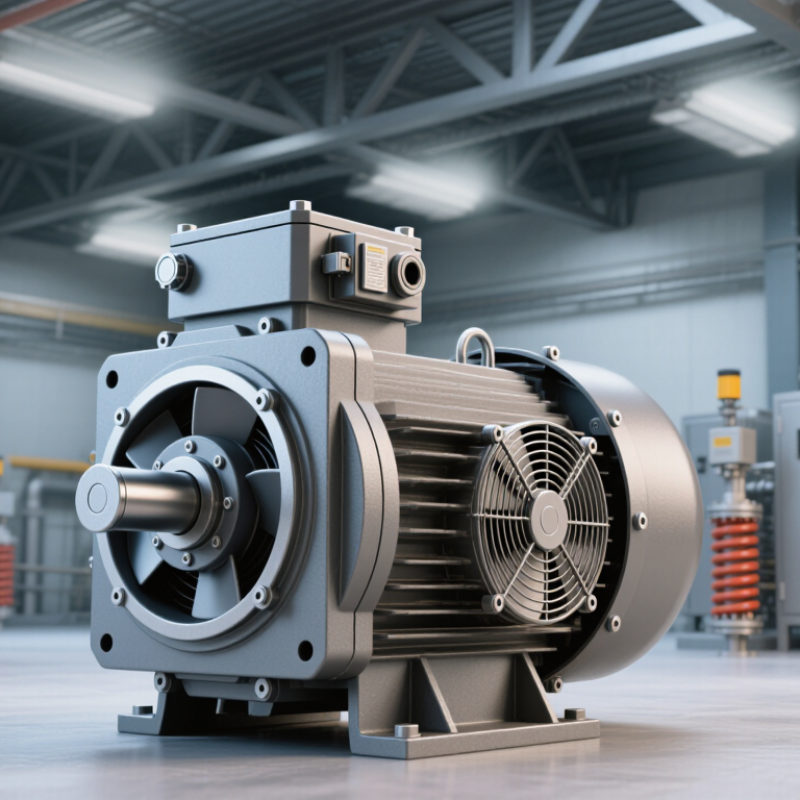
How to Choose Box Design Ex Motors in 2026?
When selecting a box design Ex motor, compare IE3 and IE4 under IEC 60034-30-1. The standard classifies motor efficiency through defined test conditions. It does not, by itself, confirm explosion protection. Check the motor’s Ex certification separately.
IE3 motors usually provide a practical balance between purchase cost and operating efficiency. IE4 motors reduce electrical losses further, especially in applications running many hours each year. A 30 kW motor may operate continuously beside a pump, fan, or conveyor. In that setting, even small percentage savings can reduce heat and electricity consumption.
But efficiency is not the only engineering decision. IE4 designs may have different starting current, slip, thermal behavior, and drive requirements. Confirm compatibility with the supply system or variable-speed drive. Examine the rated output, duty cycle, ambient temperature, and enclosure cooling method. Hazardous-area classification must match the complete motor assembly.
The nameplate needs careful reading. It should show efficiency data, rated conditions, temperature limits, and certification information. Ask for test methods and declared tolerances. A higher IE class does not automatically mean lower lifecycle cost. Installation losses, poor alignment, and oversized motors can erase expected savings.
I have seen specifications focus too heavily on the IE label. That approach is incomplete. Recheck the real load profile before choosing IE4. Sometimes the better decision is not the more efficient motor, but the correctly sized one.