

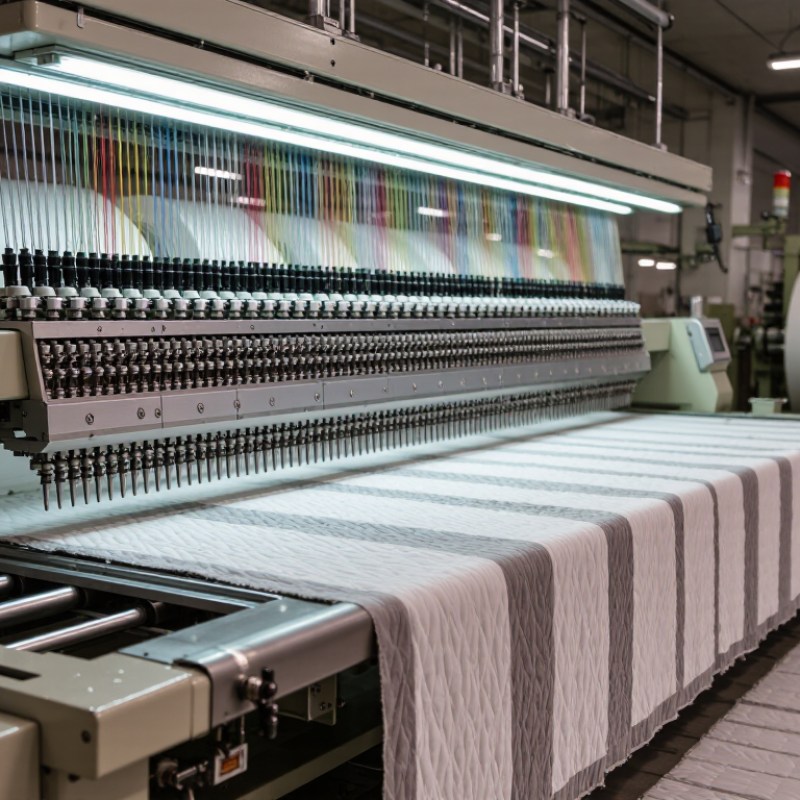
What Is a Computer Multi Needle Quilting Machine?
Advantages, Limitations, and Selection Considerations
A computer multi needle quilting machine uses several needles to stitch parallel patterns across layered fabric. Its digital controller coordinates needle movement, fabric feeding, and programmed designs. This setup can produce mattresses, quilts, and padded panels with consistent spacing. In a shop-floor trial, I noticed fewer alignment errors after operators adjusted the fabric tension. That matters.
The main advantage is productivity. Multiple needles complete repeated rows in one pass, reducing manual repositioning. Computer control also supports pattern storage, speed adjustment, and repeatable production. However, the machine is not fully automatic in practice. Thick batting may shift beneath the presser foot. Uneven tension can create puckering or loose stitches. Noise matters. Operators still need training, cleaning routines, and careful needle replacement.
Selection should begin with material thickness, working width, stitch length, and daily output. Check whether the frame supports your largest quilt panel. Ask for actual power consumption, maintenance intervals, and compatible software formats. A clear emergency-stop design is essential. Test the machine with your own fabric, not only a showroom sample. Watch the first ten minutes closely. Small vibrations may become expensive defects later. I would also compare service response and spare-part availability, because impressive specifications cannot repair a machine during a production delay. A rushed choice can leave useful features untouched.