

Scroll Top
4801 Bennett Rd. Toledo, Ohio 43612

Why Choose a Smart Air Pressure Gauge?

Choosing a Smart Air Pressure Gauge is not about adding another device to a toolbox. It is about making pressure checks clearer, faster, and more consistent.

William Van Tassel, Ph.D., formerly AAA’s manager of driver training programs, has emphasized, “Checking your tire pressure is one of the easiest things you can do to improve your vehicle’s safety and fuel economy.” His point remains practical. A tire may look properly inflated while its pressure is already outside the recommended range. A Smart Air Pressure Gauge can display a precise reading, store measurements, and alert users when pressure changes unexpectedly.

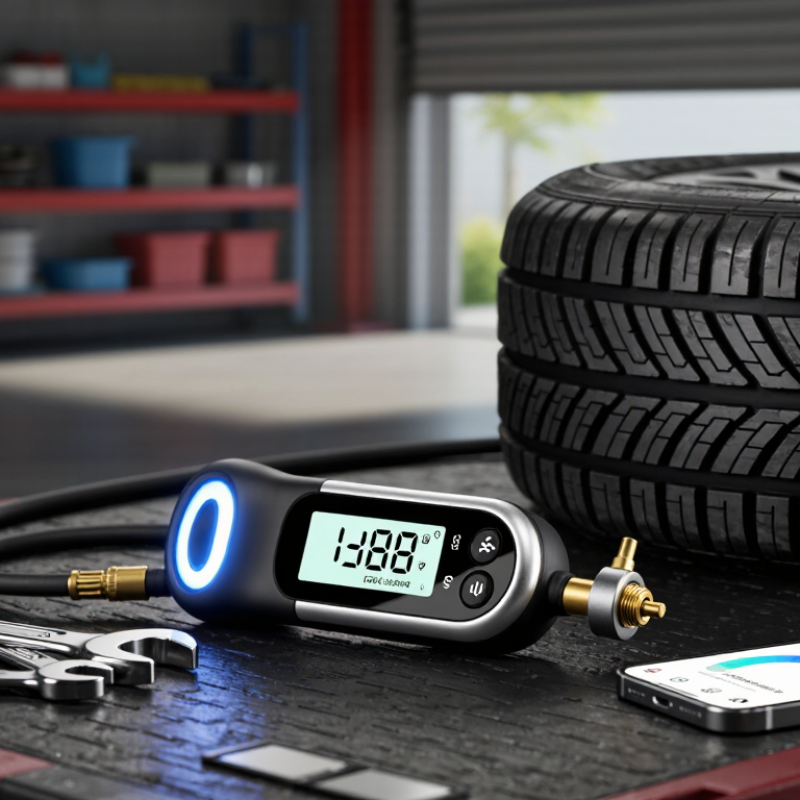
Imagine checking a cold tire before a morning commute. The digital screen shows 31.6 PSI, not merely “low” or “high.” Some models connect with mobile apps, while others provide audible alerts or automatic shutoff functions. These details reduce guesswork, especially in dim garages or busy workshops.

Still, smart does not mean perfect. Sensors can lose accuracy, batteries can weaken, and wireless connections may fail. That limitation matters. Users should compare readings with the vehicle manufacturer’s recommended pressure and inspect the gauge regularly. A connected tool cannot replace sound judgment.

The real advantage is repeatable information. For drivers, fleet operators, cyclists, and maintenance teams, consistent measurements can support safer handling, steadier fuel use, and longer tire life. The best Smart Air Pressure Gauge is not necessarily the most expensive model. It is the one that delivers readable data, dependable calibration, and simple operation when pressure matters most.
Why Choose a Smart Air Pressure Gauge?

What Is a Smart Air Pressure Gauge?

A smart air pressure gauge is a measuring device with sensors, a digital processor, and useful data features. Unlike a basic dial gauge, it can show pressure more precisely and detect changes quickly. Some models store readings, support automatic shutoff, or send alerts to a connected device. The exact features vary, so “smart” should not be accepted without checking the specifications.

In practical maintenance, the value appears during repeated checks. A technician can compare readings across several tires, tanks, or pneumatic lines without writing every number down. The U.S. Department of Energy reports that fuel economy may drop by about 0.2% for each 1 psi of tire underinflation. NHTSA safety guidance also stresses regular pressure inspection because underinflation affects handling, heat buildup, and tire wear. These figures show why accurate measurement matters. Still, a smart gauge is not automatically accurate. Temperature, battery condition, valve damage, and poor calibration can distort results. I have found that convenience sometimes encourages rushed checks.

Tips: Measure when equipment is cool and stable. Check the recommended pressure, not the maximum printed on the tire. Compare the gauge with a calibrated reference periodically. Keep a simple record of date, pressure, and temperature. Small errors become expensive over time.

Why Choose a Smart Air Pressure Gauge?

What Is a Smart Air Pressure Gauge?

A smart air pressure gauge digitally measures air pressure and presents the result in a clear unit such as bar or PSI. Compared with a basic gauge, it can offer easier reading, higher resolution, automatic unit conversion, and more consistent pressure checks.

The chart shows representative target-pressure midpoints for common inflation tasks. Actual values vary by vehicle, tire design, equipment, user weight, and the manufacturer’s specifications. A smart gauge helps users check these different pressure levels accurately and switch between measurement units when needed.

How Smart Air Pressure Gauges Measure and Monitor Pressure

Smart air pressure gauges use electronic sensors to measure air pressure inside a tire, pipe, tank, or pneumatic system. The sensor detects force against a flexible sensing element. It then converts that force into an electrical signal. A processor interprets the signal and displays a pressure value, often in real time. Readings may appear in psi, bar, kPa, or other units.

Monitoring pressure is more useful than taking one isolated reading. Many gauges record changes over time and warn users when pressure moves beyond a selected range. Some models connect to mobile devices or control systems through wireless communication. This allows technicians to observe slow leaks, sudden drops, or unstable pressure during operation. In practical inspections, a small pressure decline can reveal a loose fitting before visible damage appears.

Temperature can influence accuracy. Pressure often rises as air becomes warmer, even when no air enters the system. Sensors also require proper calibration and a clean connection. Dirt around the valve may create a false reading. No gauge is perfect. A hurried measurement can still mislead an experienced technician. Comparing the device with a certified reference gauge remains sensible, especially in safety-sensitive equipment. Batteries, sensor aging, and damaged seals also deserve attention during routine checks.

Key Features of Smart Air Pressure Gauges

When choosing a smart air pressure gauge, I look beyond a bright digital screen. The key feature is a calibrated sensor that delivers stable readings across a useful pressure range. In a busy workshop, clear resolution helps me notice small changes before they become costly problems. A backlit display remains readable beside a compressor or under a vehicle. Some models also support multiple units, such as psi, bar, and kPa.

Smart functions make measurements easier to repeat. An automatic shutoff protects against overinflation, while programmable limits can warn users early. A hold function keeps the reading visible after the nozzle leaves the valve. Bluetooth or wireless logging may help technicians compare readings over time. However, wireless features are not always necessary. They can add setup steps, battery use, and another point of failure. That trade-off deserves honest attention.

Reliable gauges should include zero adjustment, low-battery alerts, and a documented calibration process. I also check the hose, connector, sealing washer, and resistance to dust or moisture. A rugged case matters when the tool rests on concrete. Still, no smart gauge replaces good measurement habits. Temperature, valve damage, and trapped air can distort results. I once blamed a gauge for inconsistent readings before finding a loose connector. That mistake changed my routine: I now compare questionable results with a known reference gauge. Specifications help, but field checks reveal more.

Benefits of Using a Smart Air Pressure Gauge

Why Choose a Smart Air Pressure Gauge?

A smart air pressure gauge turns a routine pressure check into usable maintenance data. Its sensor records readings, identifies unusual changes, and can send alerts before equipment performance declines. In daily industrial work, this reduces guesswork. A technician can compare pressure at the compressor, production line, and tool inlet. The difference often reveals a clogged filter, leaking hose, or undersized pipe. Small changes matter.

The U.S. Department of Energy reports that compressed-air leaks can waste 20–30% of a system’s output. A smart gauge helps locate abnormal pressure loss faster, especially when readings are logged over time. It also supports preventive maintenance, because teams can see gradual pressure drift instead of waiting for a failure. Less emergency troubleshooting. More evidence.

Accuracy still depends on calibration, installation, and operating temperature. The number is not magic. The DOE recommends checking system performance under actual demand, not only during quiet periods.

Calibration should follow documented procedures, ideally through a laboratory operating to ISO/IEC 17025 requirements. This strengthens measurement reliability and audit records.

Yet users should question automatic alerts, too. A damaged sensor, loose fitting, or poor network connection can create misleading data. Smart monitoring works best when digital readings are verified with a trusted reference gauge during scheduled inspections.

How to Choose the Right Smart Air Pressure Gauge

Choosing the right smart air pressure gauge starts with the measurement, not the app. Check its pressure range against your tires, compressors, or pneumatic tools. A gauge designed for vehicle tires may not suit high-pressure workshop systems. Look for accuracy, resolution, and selectable units such as psi, bar, and kPa. A bright display matters in a dim garage.

NHTSA field research has found that many vehicles operate with significantly underinflated tires. The U.S. Department of Energy estimates that each 1 psi loss can reduce fuel economy by about 0.2%. These figures make repeatable measurement more important than attractive packaging. Choose a model with a stable sensor, automatic shutoff, and a secure chuck. Bluetooth or wireless logging helps when several tires require inspection. However, connectivity is not automatically useful.

Consider calibration records, battery access, temperature tolerance, and protection from dust or water. A gauge rated for frequent outdoor use should also have a reinforced hose and readable controls. ISO 10012 emphasizes traceable measurement processes, so calibration support deserves attention. Cheap devices may display impressive decimals. That does not guarantee accuracy.

Test the gauge against a certified reference occasionally. My practical preference is simple: fewer functions, clearer readings, and dependable calibration. A perfect gauge does not exist. Even experienced users can overlook a leaking valve or a cold-weather pressure change. Choose the instrument that exposes those small mistakes instead of hiding them.

Why Choose a Smart Air Pressure Gauge? - How to Choose the Right Smart Air Pressure Gauge

Selection Dimension Why It Matters Typical Options or Data Recommended Choice
Measurement Range The gauge should cover the normal operating pressure without frequently reaching its upper limit. Common air-pressure ranges include 0–1 bar, 0–2.5 bar, 0–10 bar, and 0–16 bar. Choose a full-scale range about 25% to 50% higher than the maximum expected working pressure.
Accuracy Higher accuracy improves pressure control, leakage detection, and maintenance decisions. Digital gauges commonly specify accuracy from approximately ±0.05% to ±1.0% of full scale, depending on design and conditions. Use ±0.25% to ±0.5% full-scale accuracy for general industrial monitoring; select higher accuracy for calibration or laboratory work.
Pressure Units Different industries and regions use different pressure units, so conversion capability reduces reading errors. Common units include bar, psi, kPa, MPa, kgf/cm², and inHg. Choose a gauge that supports the units used by the equipment manual and maintenance team.
Connection Type The process connection must match the pneumatic fitting and installation space. Common connections include G1/8, G1/4, 1/8 NPT, 1/4 NPT, and quick-connect fittings. Match thread standard, size, sealing method, and connection orientation before purchase.
Gauge Pressure or Absolute Pressure The measurement reference affects the meaning of the reading, especially at changing elevations or in vacuum applications. Gauge pressure compares pressure with ambient atmosphere; absolute pressure compares it with a near-perfect vacuum. Select gauge pressure for most compressed-air systems and absolute pressure for vacuum, altitude, or gas-law calculations.
Wireless Communication Wireless access enables remote readings, data logging, alarms, and inspections without opening the equipment enclosure. Short-range Bluetooth Low Energy is common; longer-range systems may use Wi-Fi, cellular, or industrial wireless networks. Choose Bluetooth for nearby service work and Wi-Fi or cellular connectivity for distributed monitoring.
Data Logging Stored readings help identify pressure drops, intermittent faults, leakage, and equipment cycling. Logging intervals may range from seconds to hours; memory capacity varies by device and sampling interval. Select adjustable sampling intervals and exportable CSV or equivalent files for trend analysis.
Alarm Functions High- and low-pressure alerts allow users to respond before production or equipment performance is affected. Available alert methods include on-screen warnings, audible alarms, indicator lights, app notifications, and relay outputs. Use adjustable alarm thresholds with hysteresis to reduce repeated alerts near the limit.
Ingress Protection Protection against dust and water is essential for workshops, outdoor installations, and washdown areas. IP54 protects against limited dust ingress and water splashes; IP65 provides dust protection and water-jet resistance when properly tested. Choose the IP rating according to the actual installation environment and cleaning method.
Operating Temperature Temperature can affect sensor accuracy, battery life, display readability, and wireless performance. Many industrial electronic gauges operate near −10°C to 50°C or −20°C to 70°C, depending on the model. Select a specified range that covers both the ambient temperature and the process temperature.
Power Supply Power requirements influence installation complexity, service intervals, and suitability for remote locations. Options include replaceable batteries, rechargeable batteries, USB charging, and wired supplies such as 12–24 V DC. Choose battery operation for portable checks and wired power for continuous monitoring or frequent alerts.
Display and Readability A clear display reduces reading errors in low-light, high-glare, or restricted-access locations. Common features include backlighting, large digits, selectable units, automatic shutoff, and peak-pressure display. Select a backlit display with digits large enough to read from the normal inspection distance.
Calibration and Traceability Calibration records support quality control, preventive maintenance, and measurement confidence. Calibration intervals are application-dependent; many organizations use annual verification as a starting point. Choose a gauge with a documented calibration procedure and recalibrate according to risk, usage, and applicable requirements.

Note: Specification ranges are typical industry values. Always confirm the exact operating range, accuracy, connection standard, environmental rating, and communication method in the product documentation.